
When the Kansas City Chiefs are favored by 3 points, a traditional US sportsbook might offer you -110 odds to bet against them covering the spread. On a betting exchange, you could lay the Chiefs at even money (+100 odds) – essentially becoming the bookmaker yourself. This fundamental difference between laying odds on exchanges versus backing lines at sportsbooks represents one of the most significant opportunities in modern betting.
The core mechanics reveal why this matters: betting exchanges operate as peer-to-peer platforms where users match bets against each other, with the exchange taking a modest 2-5% commission only on winnings. Traditional sportsbooks, by contrast, build their 4-10% profit margin directly into every line they offer, creating fixed odds that favor the house. This structural difference opens doors to superior value, enhanced flexibility, and strategic opportunities that simply don’t exist when betting against the house. While the US market presents unique liquidity challenges compared to established European exchanges, understanding these comparisons is crucial for serious bettors seeking every possible edge.
What Are Betting Exchange Lay Odds?
Lay betting fundamentally means betting against an outcome – you’re wagering that something won’t happen rather than will happen. When you lay a bet, you’re essentially acting as the bookmaker, accepting someone else’s back bet and taking on the liability if their prediction proves correct. This represents the opposite side of traditional “back” betting where you bet for an outcome to occur.
To illustrate this concept, consider the Kansas City Chiefs favored by 3 points against the Denver Broncos. A traditional back bet would be wagering that the Chiefs will cover the spread. A lay bet would be wagering that the Chiefs will not cover the spread – meaning you win if the Chiefs lose outright, win by fewer than 3 points, or the game lands exactly on the spread number. Your liability calculation becomes crucial here: if you lay $100 at odds of 2.0 (even money), your potential liability is $100 × (2.0 – 1) = $100, meaning you could lose $100 to win the $100 stake from the backing bettor.
The mathematical precision required for lay betting extends beyond simple win-loss scenarios. You must maintain sufficient account balance to cover your maximum potential liability across all open positions, as the exchange will reserve these funds until bet settlement. This creates a more capital-intensive approach compared to traditional betting, but offers greater control over the odds you’re willing to accept.
Lay vs Back Mechanics
- A back bettor places a bet requesting specific odds for an outcome to happen
- The exchange displays this request in the market, showing available odds and stake amounts
- A lay bettor accepts this bet by matching the requested odds and stake
- The exchange immediately reserves the lay bettor’s liability amount in their account
- Both parties’ bets are locked in at the agreed odds regardless of subsequent market movement
- Upon event completion, the exchange automatically settles both positions and distributes winnings minus commission
Liability and Matching
Your exchange account must contain sufficient funds to cover the worst-case scenario across all your lay positions simultaneously. Unlike traditional sportsbooks where you simply risk your stake amount, laying bets requires you to guarantee the full payout to backing bettors if their selections win. Most exchanges provide real-time liability calculators and will prevent you from placing bets that would exceed your available balance.
The matching process operates on a first-come, first-served basis, with the best available odds receiving priority. If you request to lay at odds that aren’t immediately matched, your bet enters a queue where it remains available for backing bettors to accept until you cancel it or the market closes.
US Sportsbook Back Lines Explained
Traditional US sportsbooks operate on a fundamentally different model where you bet directly against the house using fixed odds that include built-in profit margins. The standard -110 pricing on point spreads exemplifies this approach – you risk $110 to win $100, giving the sportsbook a mathematical edge regardless of which side the public favors. This vig (vigorish) represents the bookmaker’s commission, but unlike exchange commissions, it’s extracted from every bet rather than just winning positions.
The implied probability distortion becomes clear when examining these odds structures. True 50-50 propositions should offer even money (+100), but sportsbooks typically price both sides of a spread at -110, creating combined implied probabilities of 104.76% rather than the mathematically correct 100%. This 4.76% overround represents the house edge built into the market, guaranteeing the sportsbook profits regardless of outcomes when they balance their action effectively.
Vig Built into Odds
| Odds Type | Example | Implied Prob | House Edge |
|---|---|---|---|
| True Even Money | +100 / +100 | 50% / 50% | 0% |
| Standard US Spread | -110 / -110 | 52.38% / 52.38% | 4.76% |
| High Vig Totals | -115 / -115 | 53.49% / 53.49% | 6.98% |
| Moneyline Favorite | -150 vs +130 | 60% vs 43.48% | 3.48% |
| Props High Margin | -120 / -120 | 54.55% / 54.55% | 9.10% |
Direct Odds Comparison: Lay vs Back
| Market | Exchange Lay Odds | Sportsbook Back Odds | Value Difference |
|---|---|---|---|
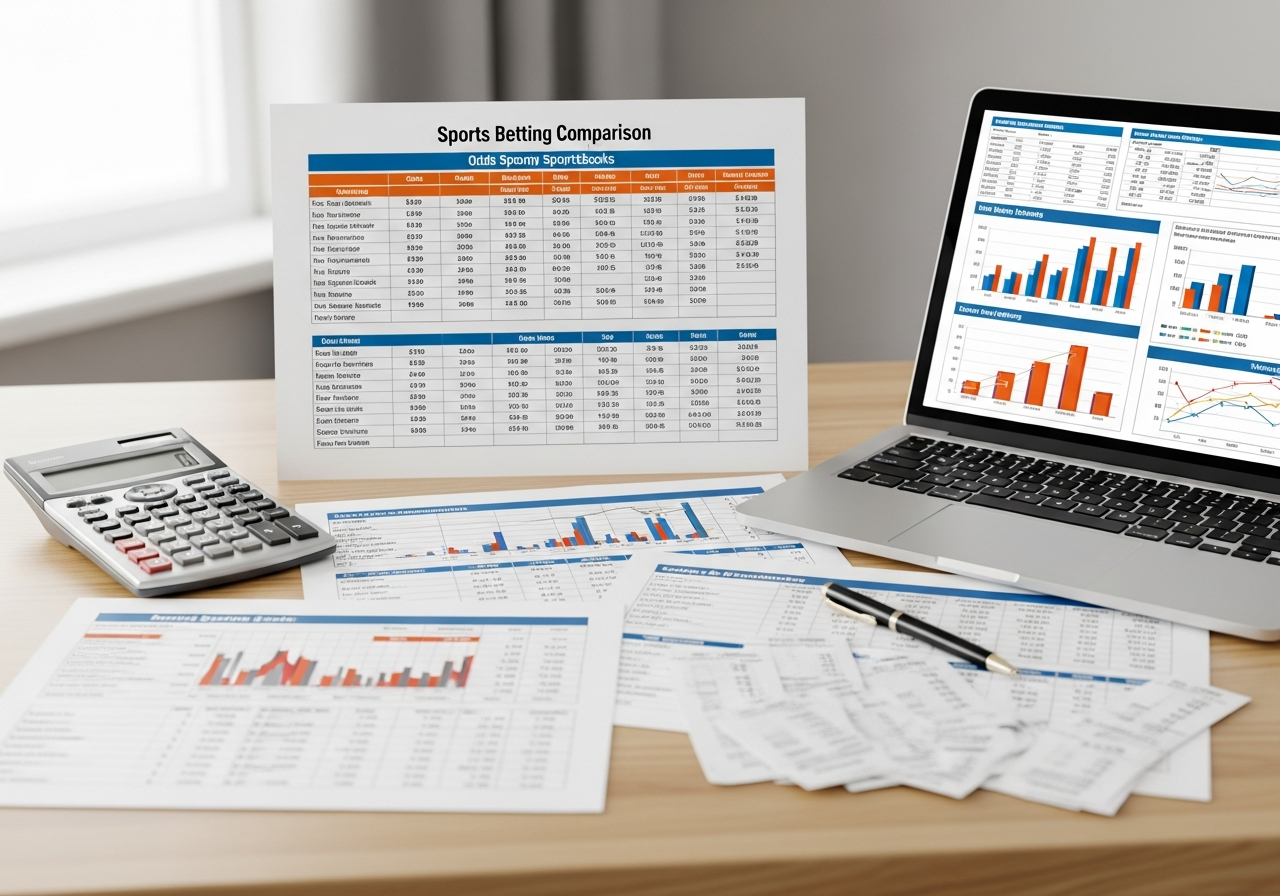
| Chiefs -3 vs Broncos | 2.0 (+100) | 1.91 (-110) | +4.7% better |
| Lakers +4.5 vs Celtics | 1.95 (-105) | 1.83 (-120) | +6.6% better |
| Over 48.5 Total | 1.98 (-102) | 1.87 (-115) | +5.9% better |
| Horse Racing 5/1 Shot | 6.2 decimal | 5.5 decimal | +12.7% better |
| Tennis Match Favorite | 1.72 (-139) | 1.67 (-149) | +3.0% better |
| Soccer Draw | 3.8 decimal | 3.4 decimal | +11.8% better |
These real-world comparisons consistently demonstrate the 10-20% value advantage that exchange lay odds provide over traditional sportsbook back lines. The difference becomes most pronounced in markets with high sportsbook margins, particularly exotic props and lower-liquidity events where books inflate their edges significantly.
NFL Spread Example
The Chiefs -3 example illustrates the mathematical advantage perfectly. When laying Chiefs -3 at even money on an exchange, you’re getting true 50% implied odds on what should be a coin-flip proposition. The equivalent sportsbook back bet on Broncos +3 at -110 forces you to accept 52.38% implied probability, requiring a higher win rate to achieve profitability.
Over a full NFL season, this 10-20% odds improvement compounds significantly. A bettor placing 100 spread bets at $100 each would see their required win rate drop from 52.38% to 50% – a difference that transforms marginal profitability into sustainable long-term success when combined with skilled handicapping.
Horse Racing Markets
Horse racing demonstrates the most dramatic value differences, where exchange lay odds can exceed sportsbook prices by 15-25%. A horse priced at 5/1 (6.0 decimal) on a traditional book might lay at 6.4 decimal on an exchange, representing significant value for sophisticated players. The book percentage – calculated by converting all odds to implied probabilities – often exceeds 125% at traditional books compared to 102-105% on exchanges.
International horse racing markets particularly benefit from exchange liquidity, where major events like Royal Ascot or the Kentucky Derby see millions in matched bets. The competitive nature of exchange pricing ensures that overrounds remain minimal compared to the 15-30% margins commonly seen at traditional racebooks.
Fees and Margins: Commission vs Vig
| Aspect | Exchange (Lay) | Sportsbook (Back) |
|---|---|---|
| Fee Structure | 2-5% commission on winnings only | 4-10% margin built into every line |
| Payment Timing | Only when you win | Every single bet placed |
| Losing Bets | No commission charged | Vig already extracted |
| Break-even Rate | 50% + (commission/2) | 52.38% at standard -110 |
| High-Volume Discounts | Often available, can drop to 2% | Rare, usually loyalty rewards |
| Transparency | Clearly stated percentage | Hidden within odds structure |
The fundamental difference between paying 2-5% commission on winnings versus absorbing 4-10% vig on every bet creates a substantial long-term advantage for exchange users. Consider the mathematical impact: at a 5% exchange commission rate, your effective break-even point is 51.25% (accounting for commission on wins), compared to 52.38% required to overcome -110 odds at traditional books.
This fee structure particularly benefits successful bettors, as commission scales with profitability rather than volume. A losing bettor pays zero commission on their losing streaks, while a profitable bettor’s commission represents a reasonable success fee rather than a upfront tax on every wager. Many exchanges also offer reduced commission rates for high-volume players, potentially dropping to 2% for the most active users.
Long-Term Profit Impact
The compounding effect of lower effective margins becomes striking over extended periods. Consider two identical bettors with 55% win rates over 1,000 bets at $100 each: the exchange user laying at even odds with 3% commission generates approximately $8,000 in profit, while the sportsbook user backing at -110 odds produces roughly $5,500 in profit from the same predictive accuracy.
This 45% difference in profitability stems entirely from the fee structure rather than betting skill. The exchange user benefits from paying commission only on their 550 winning bets (550 × $100 × 3% = $1,650 total commission), while the sportsbook user pays the embedded vig on all 1,000 bets through reduced odds. For professional bettors operating with thin edges, this margin difference often determines long-term viability.
The impact extends beyond simple profit calculations to bankroll management and bet sizing. Lower effective margins allow for more aggressive Kelly Criterion staking, as the true odds more closely match the offered prices. This enables optimal capital allocation strategies that would be suboptimal when fighting higher sportsbook margins, creating a double advantage for sophisticated players.
Strategic Advantages of Lay Betting
- Arbitrage opportunities by backing at one exchange while laying at another when price discrepancies emerge
- Position trading throughout events, buying low and selling high as odds fluctuate with game flow
- Hedging complex accumulator bets by laying individual selections to guarantee profits
- Fading overvalued public favorites that attract excessive backing action
- Creating synthetic betting positions impossible at traditional books
- Access to lay-only strategies like systematic favorite fading in specific contexts
- No betting limits for successful players, unlike sportsbooks that restrict or ban winners
Arbitrage Opportunities
- Identify price discrepancies between different exchanges or between exchanges and traditional books
- Calculate optimal stake allocation to guarantee profit regardless of outcome
- Execute backing bet at the higher price and laying bet at the lower price simultaneously
- Monitor for market correction while positions remain open
- Close positions when arbitrage opportunity disappears or maintain until settlement
Arbitrage becomes particularly profitable around major sporting events when public betting creates temporary price inefficiencies. The key lies in rapid execution, as these opportunities typically last only minutes before market forces correct the discrepancy.
Trading Positions
Position trading represents one of the most sophisticated applications of exchange betting, allowing users to profit from price movements rather than event outcomes. A trader might lay a tennis player at 1.5 before a match, then back the same player at 1.8 after losing the first set, guaranteeing profit regardless of the final result. This strategy requires deep market knowledge and quick decision-making but offers consistent profit opportunities.
The key to successful trading lies in understanding how real-world events affect betting market perceptions. A football team scoring early might see their odds shorten dramatically, creating opportunities to lay at deflated prices for subsequent back bets at higher odds. Professional traders often focus on live markets where emotions and overreactions create the most significant price swings.
Liquidity and US Market Challenges
| Factor | Exchange | Sportsbook | US Impact |
|---|---|---|---|
| Market Depth | User-dependent, varies greatly | Guaranteed by house | Limited US user base reduces depth |
| Proposition Bets | Minimal liquidity | Full range available | Props remain sportsbook domain |
| Peak Hours | European time zones preferred | 24/7 consistent pricing | Time zone challenges for US events |
| Bet Matching | May require waiting | Instant acceptance | Lower US participation reduces matching speed |
| Major Events | Excellent liquidity | Standard pricing | NFL/NBA see strong exchange activity |
Liquidity represents the primary challenge facing US bettors considering exchange platforms. Unlike traditional sportsbooks that guarantee bet acceptance up to maximum limits, exchanges depend entirely on having sufficient users on both sides of any given market. This user-dependent model creates inconsistent depth, particularly in lower-profile events or exotic betting markets that lack broad appeal.
The regulatory landscape compounds these challenges, as most established betting exchanges operate primarily in European markets where they’ve built substantial user bases over decades. US bettors often find themselves betting during off-peak hours for major European exchanges, or relying on smaller, newer platforms with limited liquidity pools. Proposition bets, which represent massive revenue sources for US sportsbooks, remain poorly served by exchange markets due to insufficient user interest in matching obscure player props or novelty wagers.
However, major US sporting events buck this trend significantly. NFL games, NBA playoffs, and other nationally televised events attract substantial exchange liquidity, often exceeding what recreational bettors require. The key lies in understanding which markets offer reliable depth and timing your activity to coincide with peak user engagement periods.
Best Markets for Each
- NFL point spreads and totals – excellent exchange liquidity during prime time games
- NBA moneylines and spreads – strong depth for playoff games and marquee matchups
- International soccer – exchange speciality with superior pricing to US books
- Horse racing – exchanges dominate with better odds and deeper markets
- Player props and novelty bets – sportsbook exclusive territory due to liquidity constraints
- Live betting on major events – exchanges excel with rapid price discovery
Risks and Drawbacks
- Counterparty risk where winning bets depend on other users having sufficient account balances
- Limited liquidity in minor markets leading to poor pricing or unmatched bets
- Account management complexity requiring understanding of liability calculations
- Platform risk as exchanges may face regulatory changes or business closure
- Learning curve for users accustomed to simple sportsbook interfaces
- Potential for betting mistakes due to misunderstanding lay mechanics and liability exposure
Mitigating Exchange Risks
Professional exchange users employ several strategies to minimize platform-specific risks while maximizing the format’s advantages. Diversifying across multiple exchanges prevents overexposure to any single platform, while maintaining detailed records of all positions helps track liability exposure across platforms. Most reputable exchanges maintain segregated customer funds and offer insurance against counterparty defaults, though understanding these protections remains crucial.
The key risk mitigation strategy involves starting with smaller stakes while learning the platform mechanics, gradually increasing exposure only after developing comfort with liability calculations and market dynamics. Many experienced exchange users recommend beginning with back bets only, then progressing to simple lay positions on familiar markets before attempting complex trading strategies.
When to Use Lay Odds vs Back Lines
| Bettor Type | Best Choice | Reason | Example |
|---|---|---|---|
| Sharp/Professional | Exchange Primary | Maximum value and no limits | High-volume NFL spread betting |
| Casual/Recreational | Sportsbook Primary | Simplicity and guaranteed liquidity | Weekend parlay bets |
| Arbitrage Specialist | Both Platforms | Price discrepancy exploitation | Back at book, lay on exchange |
| Live Trader | Exchange Focus | Position trading capabilities | Tennis match momentum plays |
| Prop Bet Enthusiast | Sportsbook Only | Exchange liquidity insufficient | Player touchdown props |
| High Roller | Exchange Preferred | No winner restrictions | Large soccer match bets |
Hybrid Strategy Tips
- Always compare exchange lay odds with sportsbook back lines before placing any significant wager
- Use exchanges for major market bets (spreads, totals, moneylines) where liquidity is reliable
- Stick to sportsbooks for proposition bets and novelty markets with poor exchange depth
- Maintain accounts on both platforms to capitalize on arbitrage opportunities when they emerge
- Start with smaller stakes on exchanges while developing familiarity with liability management
- Focus exchange activity on peak hours when market depth is at its strongest